


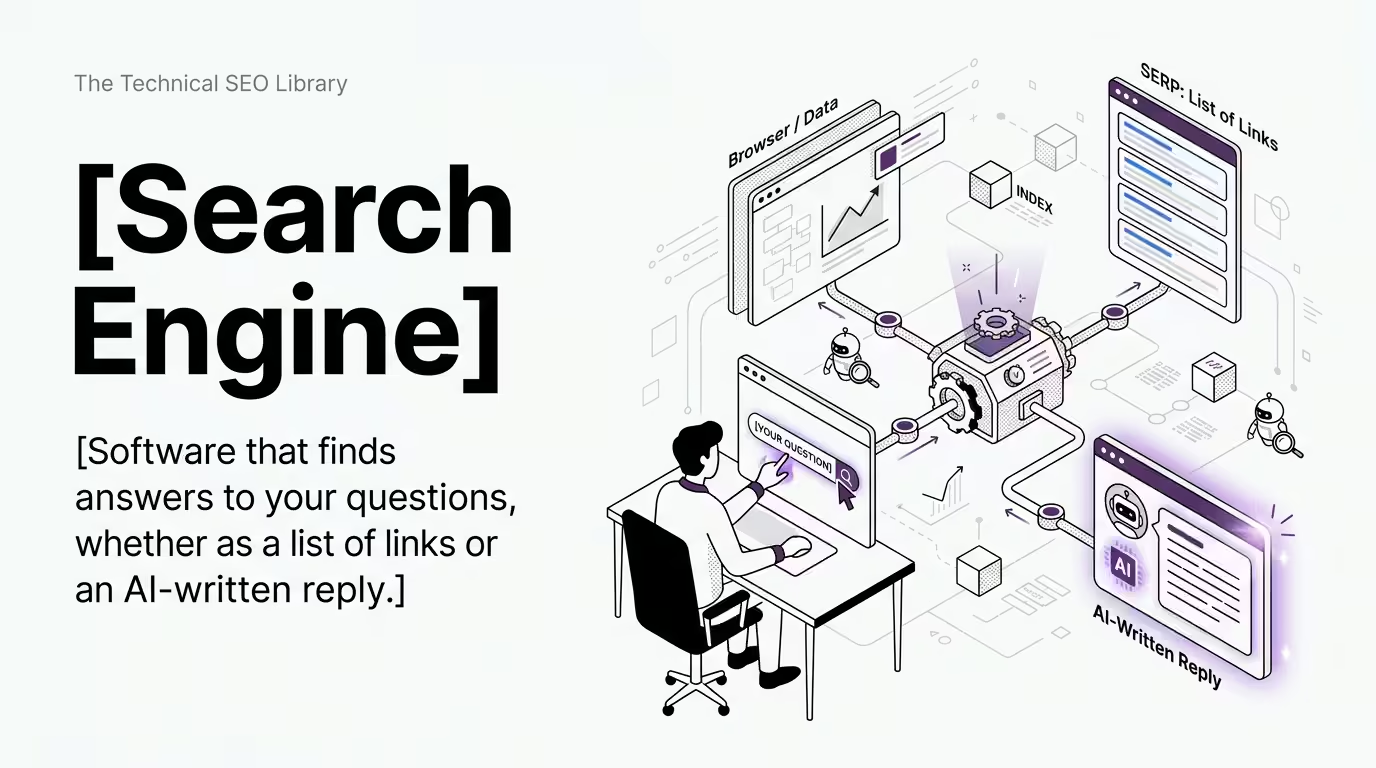
A search engine is software that finds, organises, and ranks information across the web (or another defined source) and presents it in response to a query. Modern search engines include traditional engines such as Google and Bing, which return lists of links, and AI search engines such as ChatGPT Search, Perplexity, and Google’s AI Overviews, which generate written answers from indexed sources.
Key Takeaways
A quick view of what a search engine is and how it works:
- A search engine performs four core jobs: crawling, indexing, ranking, and serving.
- The two primary categories are traditional search engines (Google, Bing, DuckDuckGo) and AI search engines (ChatGPT search, Perplexity, Claude, Google’s AI Overviews).
- Specialised search engines such as YouTube, Amazon, and LinkedIn use the same underlying process but search a narrower slice of content.
- Google holds roughly 90 per cent of the global market for traditional search.
- The rise of AI search engines has expanded what being found online means, from ranking in results pages to being cited inside AI generated answers.
Understanding Search Engines
At its core, a search engine is software that solves a problem of scale. The web contains over a hundred billion pages of information. No human could read them, organise them, or recall them in real time. A search engine does all three, in milliseconds, every time you type a query.
The job of a search engine is to know what is on the web, decide what is relevant to a specific query, and deliver the answer in a usable form. Whether that form is a list of links or a written paragraph, the underlying work is the same: locate, evaluate, and present.
AI powered engines such as ChatGPT search, Perplexity, and Google’s AI Overviews are reshaping the front end of this process. Instead of showing ten links and letting the user choose, they read across multiple sources and write an answer, sometimes citing sources, sometimes not. The mechanism is still a search engine. The presentation is new.
How Search Engines Work
Every search engine, whether traditional or AI powered, performs the same four core jobs. Understanding these four steps is the foundation of everything else in SEO.
1. Crawling
Search engines send out small programs called crawlers (also known as bots or spiders) to discover content across the web. Crawlers follow links from one page to the next, building a constantly expanding map of available content. Examples include Googlebot for Google, Bingbot for Bing, GPTBot for OpenAI’s ChatGPT, and PerplexityBot for Perplexity.
2. Indexing
Once content is discovered, it is processed and stored in a massive database called an index. When you submit a search, you are not searching the live web. You are searching the search engine’s stored snapshot of it, taken shortly before your query. This is why some pages take time to appear in results after they are published.
3. Ranking
When a user submits a query, the search engine has to decide which pages in its index are most likely to answer it well. Hundreds of signals feed that decision: how authoritative the source is, how recently the page was updated, how closely the words match the query, how trustworthy the site appears, and many more. Each search engine uses a slightly different mix of signals and weighs them differently.
4. Serving
Finally, the search engine returns the results to the user. In traditional engines, this is a list of links called a search engine results page, or SERP. In AI engines, it is a written answer generated from multiple sources, sometimes with citations and sometimes without.
Types of Search Engines
Search engines fall into three broad categories, each operating on a different scope of content and serving a different kind of query.
Traditional Search Engines
Traditional search engines are the original kind, returning lists of links in response to queries. Google holds about 90 percent of the global market and has done for over a decade. Bing, Microsoft’s offering, powers Yahoo search and is increasingly relevant because of its connection to ChatGPT. DuckDuckGo focuses on user privacy. Yandex serves Russia and surrounding regions. Baidu is the dominant engine in mainland China.
Specialised Search Engines
Specialised search engines focus on a specific type of content rather than the whole web. YouTube searches video. Amazon searches products. Pinterest searches images and ideas. LinkedIn searches people and jobs. App stores search applications. These engines follow the same crawl, index, rank, and serve process but operate on a defined slice of the world.
AI Search Engines
AI powered engines crawl the web, index what they find, rank the results, and serve them as generated answers rather than as lists of links. ChatGPT search, Perplexity, Claude with web search, and Google’s AI Overviews fall into this category. While the user facing interface looks like a chatbot, the underlying machinery is still a search engine. The key difference is in the serving step: AI engines compose a written response, often citing the sources they used, often without sending the user to the original page.
Examples of Search Engines
To make the categories concrete, here is a quick reference for the major search engines you are likely to encounter or need to optimise for.
| Search Engine | Type | Notes |
|---|---|---|
| Traditional | Roughly 90 percent of the global market. The default reference for SEO work. | |
| Bing | Traditional | Microsoft’s engine. Powers Yahoo and underlies ChatGPT’s web results. |
| DuckDuckGo | Traditional | Privacy focused. Smaller share but loyal audience. |
| Yandex | Traditional | Dominant in Russia and surrounding regions. |
| Baidu | Traditional | Dominant in mainland China. |
| YouTube | Specialised | The second largest search engine in the world by query volume. |
| Amazon | Specialised | Product search. Critical for ecommerce visibility. |
| Specialised | People, jobs, and B2B content. | |
| ChatGPT Search | AI | OpenAI’s engine. Pulls heavily from Bing’s index and trust sources like Wikipedia and Reddit. |
| Perplexity | AI | Independent index. Favours content updated in roughly the last 30 days. |
| Google AI Overviews | AI | Google’s own generated answers, layered above the traditional SERP. |
| Claude with Web Search | AI | Anthropic’s engine. Smaller share but growing in professional contexts. |
Search Engine vs Browser
The terms “search engine” and “browser” are often used interchangeably, but they describe two different things.
A web browser, such as Chrome, Safari, or Firefox, is the application installed on your device that displays web pages. It is the vehicle. A search engine, such as Google or Bing, is a service that helps you locate web pages. It is the map.
You open a browser to view a website. You use a search engine, accessed through the browser, to find one. Most browsers come with a default search engine installed by default (Chrome defaults to Google, Safari to Google through Apple’s licensing arrangement, Edge to Bing), which is why the two get conflated in everyday conversation. But you can change a browser’s default search engine at any time without changing the browser itself.
A simple way to remember it: the browser is what you look through. The search engine is what you ask.
The AI Search Era
For most of search engine history, working in SEO meant working with Google. Other engines existed, but Google’s market share was so dominant that optimising for anything else was a rounding error. That has begun to shift.
People are not abandoning Google. They are also asking ChatGPT search questions they used to type into Google. They are using Perplexity for research. They are reading Google’s AI Overviews instead of clicking through to the original sources. Traditional search has not disappeared. A new layer has been added on top of it.
This changes what being found means. Historically, being found meant ranking on page one of Google. Increasingly, it can also mean being cited inside an AI engine’s written answer, even when no user ever clicks through to the source. The job description has not changed. The job itself has expanded.
Why Search Engines Matter
For most users, a search engine is a kind of magic. You type a question, an answer appears, you move on. That is fine for everyday use. For anyone building something on the web, however, the magic has to become a mechanism.
Knowing what a search engine actually does, and how it decides what to show, is the foundation of being found online. Without this foundation, every other SEO practice feels arbitrary. With it, the rest of the discipline falls into place.
Understanding the differences between traditional, specialised, and AI search engines is also increasingly important. Each behaves slightly differently. Optimising for Google does not automatically optimise for Perplexity. The same content can perform well in one and poorly in another. Knowing the system means knowing which signals to focus on.
Common Misconceptions
Even people who use search engines every day often carry a few misunderstandings about how they actually work. Three of them come up often enough to be worth clearing up.
Google is the only search engine that matters
Google remains the dominant search engine globally but is no longer the only one worth optimising for. In some industries, regions, and use cases, Bing, AI engines, or vertical search engines account for a meaningful share of discovery. Treating Google as the entire web overlooks a growing share of where users actually find content.
AI tools like ChatGPT are not search engines
They are. ChatGPT Search, Perplexity, Claude with web search, and Google’s AI Overviews all crawl the web, index what they find, rank the results, and serve answers. The interface looks different. The underlying job is the same.
Search engines read content the way a person does
They do not. A search engine processes text, links, structured data, images, and several hundred other signals, but it does not read in any human sense. It pattern matches. Recognising this difference is the start of writing for both human readers and the machines that will surface that writing.
Frequently Asked Questions
The sections above cover the foundational ground. A handful of specific questions come up often enough about search engines to be worth answering directly.
Are AI tools like ChatGPT actually search engines?
Yes. Any software that crawls the web, indexes what it finds, ranks information, and serves it in response to a query qualifies as a search engine. The interface, whether a chat window or a list of links, is a presentation choice. The underlying mechanism is the same.
How many search engines are there?
Dozens are worth knowing about. Hundreds exist in total, including specialised and regional engines. For most Western audiences, the engines that matter most are Google, Bing, DuckDuckGo, ChatGPT search, and Perplexity. For specific countries or industries, the list shifts.
Is SEO the same thing as appearing in a search engine?
No. A search engine is the system. SEO, or search engine optimisation, is the practice of helping content perform well within that system. A search engine is the destination. SEO is the route to get there.
What is the difference between a search engine and an answer engine?
A search engine traditionally returns a list of sources for you to read. An answer engine, like ChatGPT search or Perplexity, returns the answer itself, often citing sources. In practice, the line is blurring. Google now serves AI Overviews above its list of links, making the same product a search engine and an answer engine at once.
Will AI search replace traditional search engines?
Not entirely, and not soon. AI search is taking a growing share of certain query types (explanatory, conversational, complex) while traditional search remains stronger for navigational and transactional queries. The likely future is hybrid, with users choosing the engine type based on the question rather than the brand.
« Back to Glossary Index